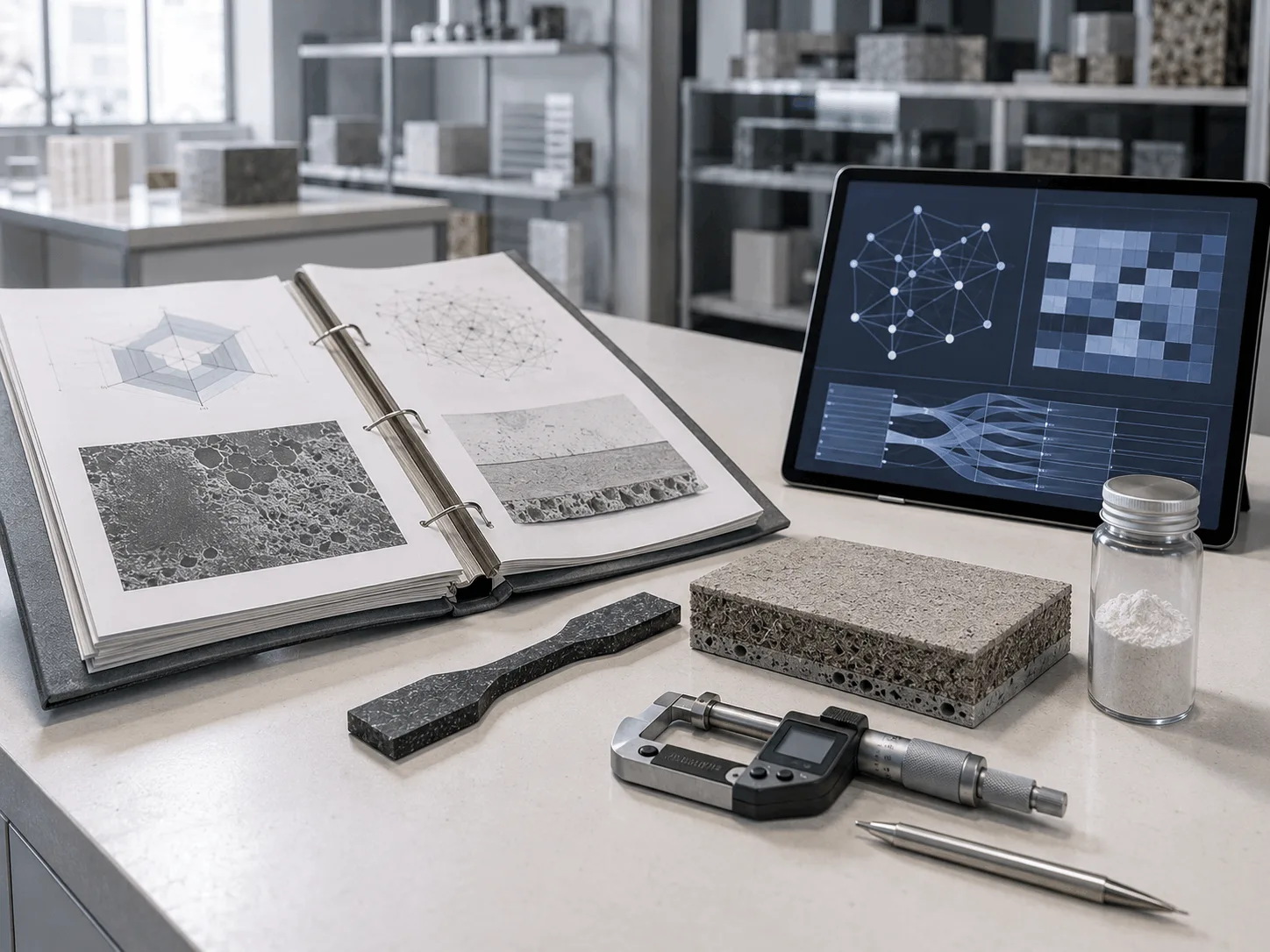
Engineering materials for a lower-carbon world.
Rhysil develops advanced materials from underutilized biological and industrial resources. We investigate how waste-derived carbon and minerals can become durable, high-performance materials for industry.
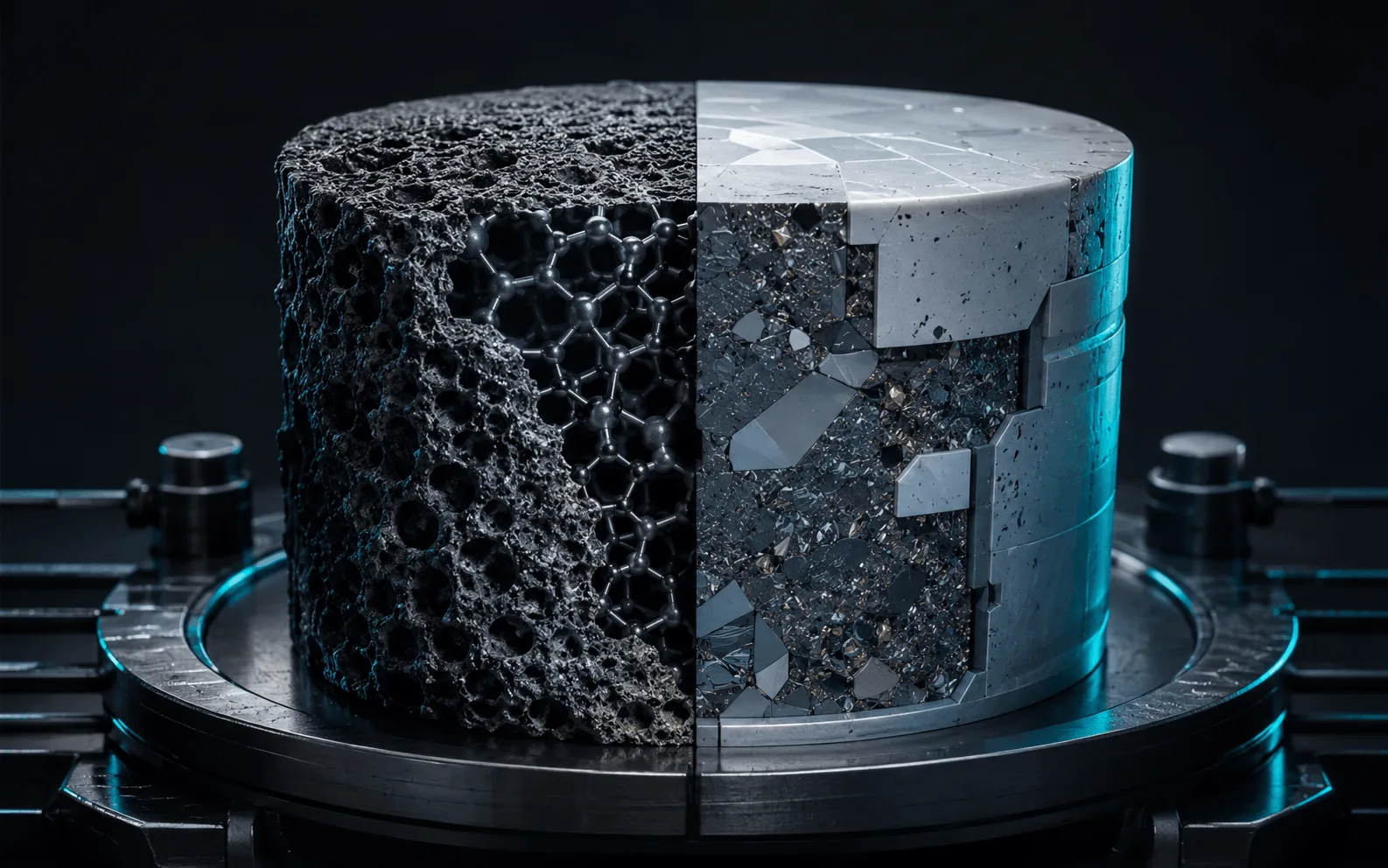
Materials science
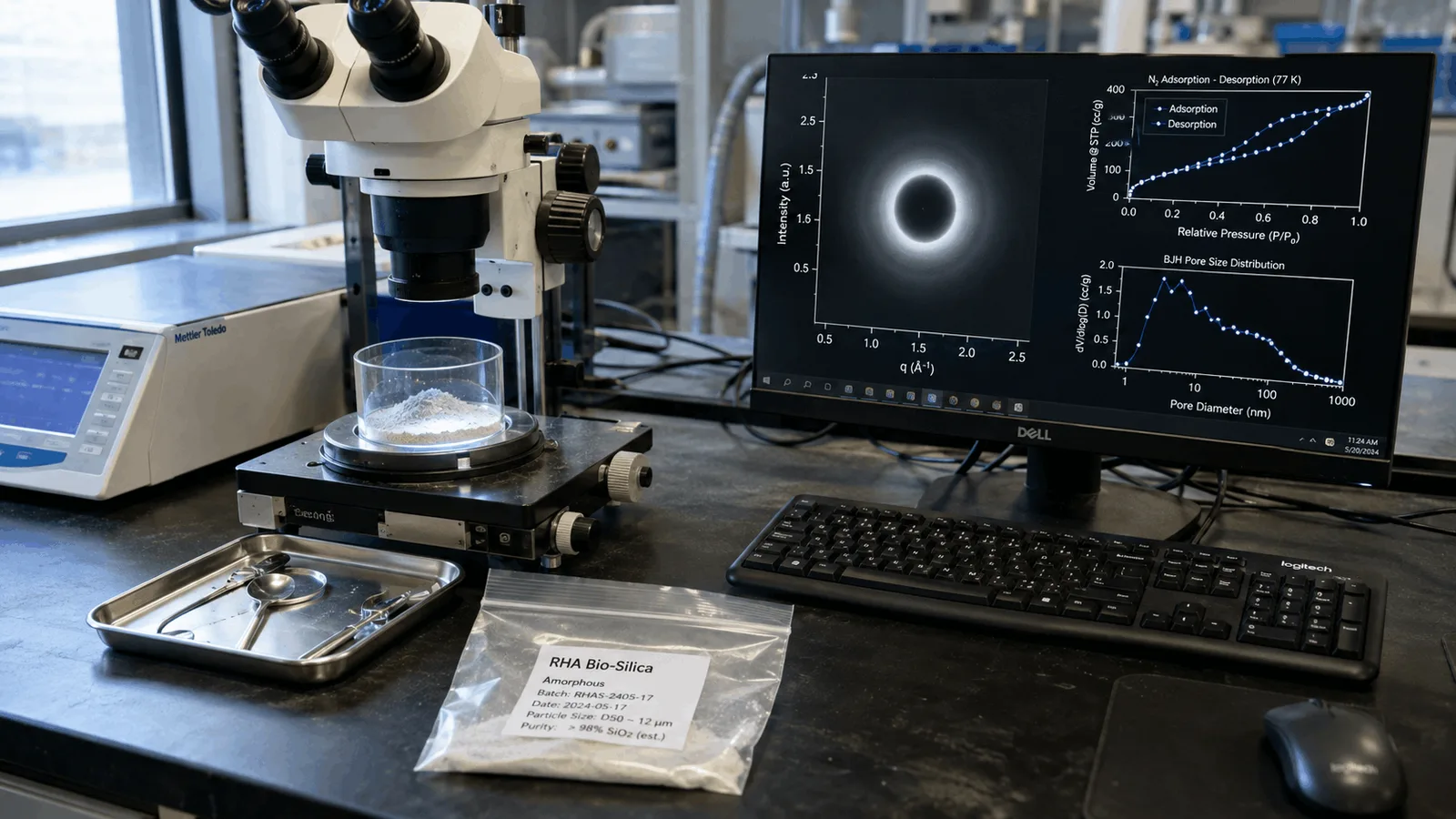
Deep analytical investigation of agricultural and industrial residues at the nanoscale to engineer high-purity amorphous bio-silica and reinforced polymer matrices.
We don't see waste.
We see unfinished materials.
Agricultural and industrial residues contain carbon, silica, minerals and functional structures. Explore the 6-stage lifecycle through which Rhysil engineers waste-derived intermediates into continuous industrial production.
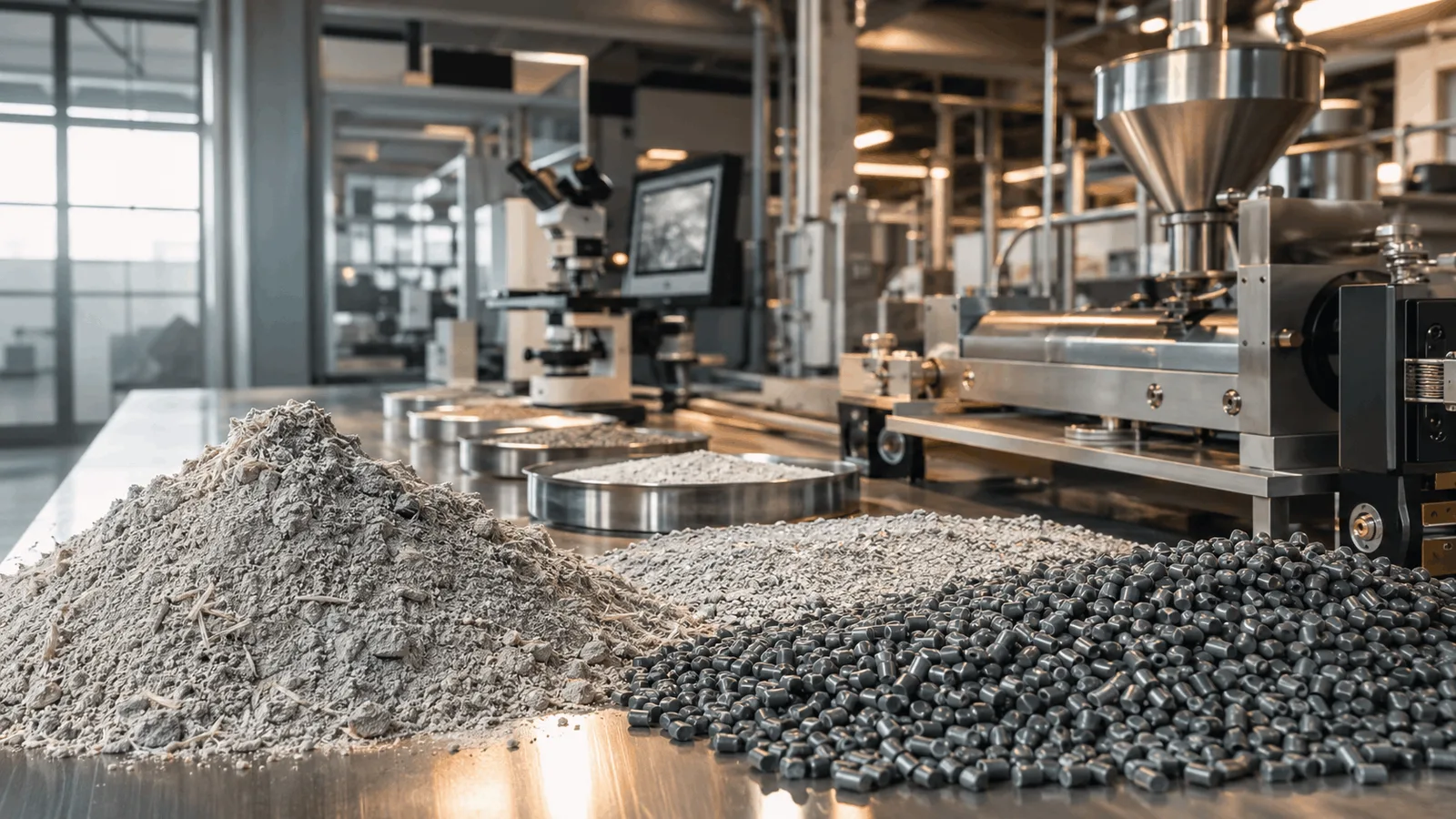
01. Recover
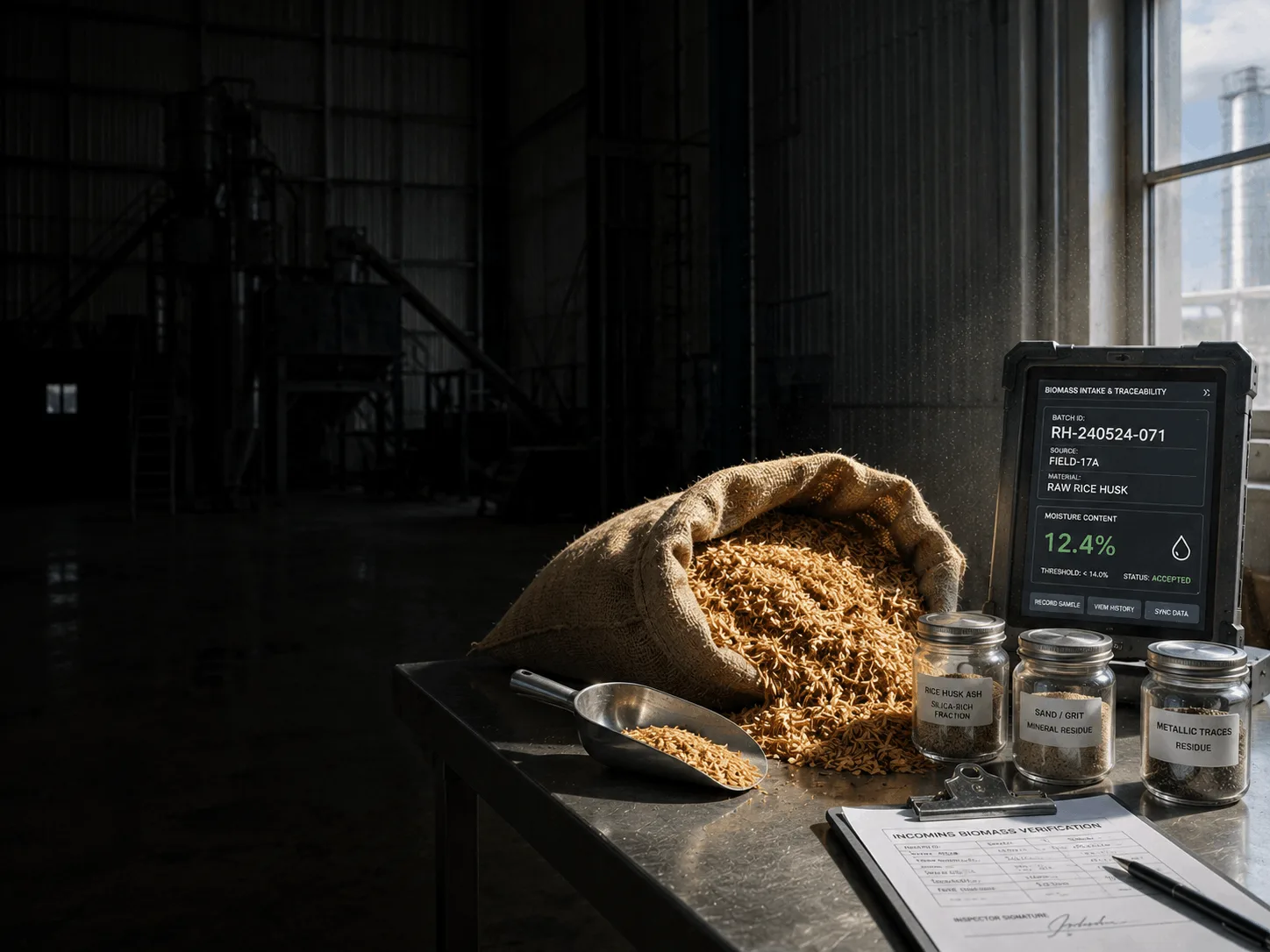
Identify and secure abundant underutilized agricultural residues, rice husk biomass, and industrial mineral byproducts from verified circular supply chains.
Core programs in carbon and mineral materials science.
Rhysil investigates how agricultural residues, combustion byproducts, and industrial minerals can be converted into high-performance industrial inputs.
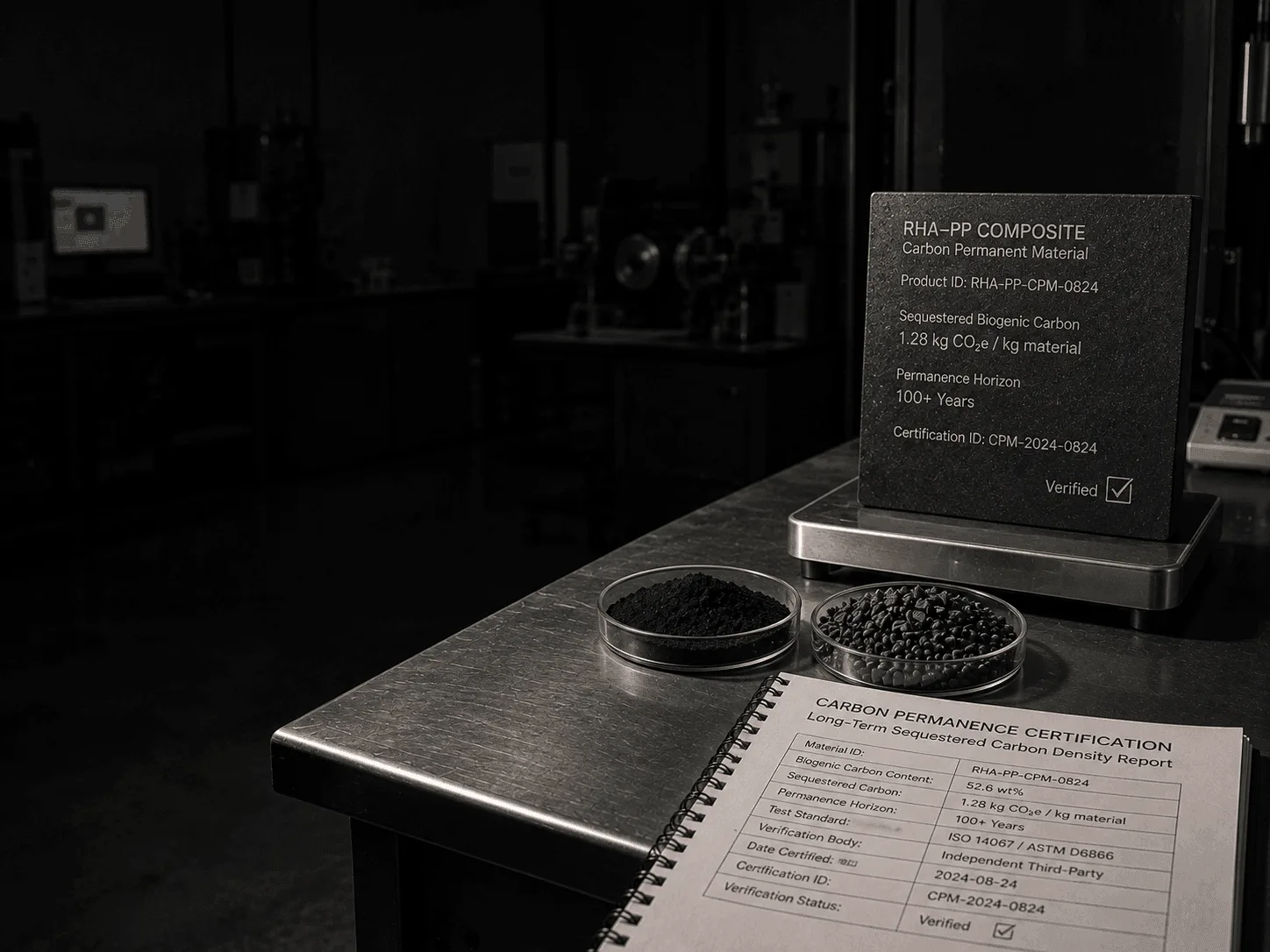
Carbon-Storing Composites
Evaluating carbon-rich residues in polymer composites for high durability and measurable carbon storage.
Targeted programs for commercial translation.
Structured programs applying material sciences to commercial manufacturing challenges.
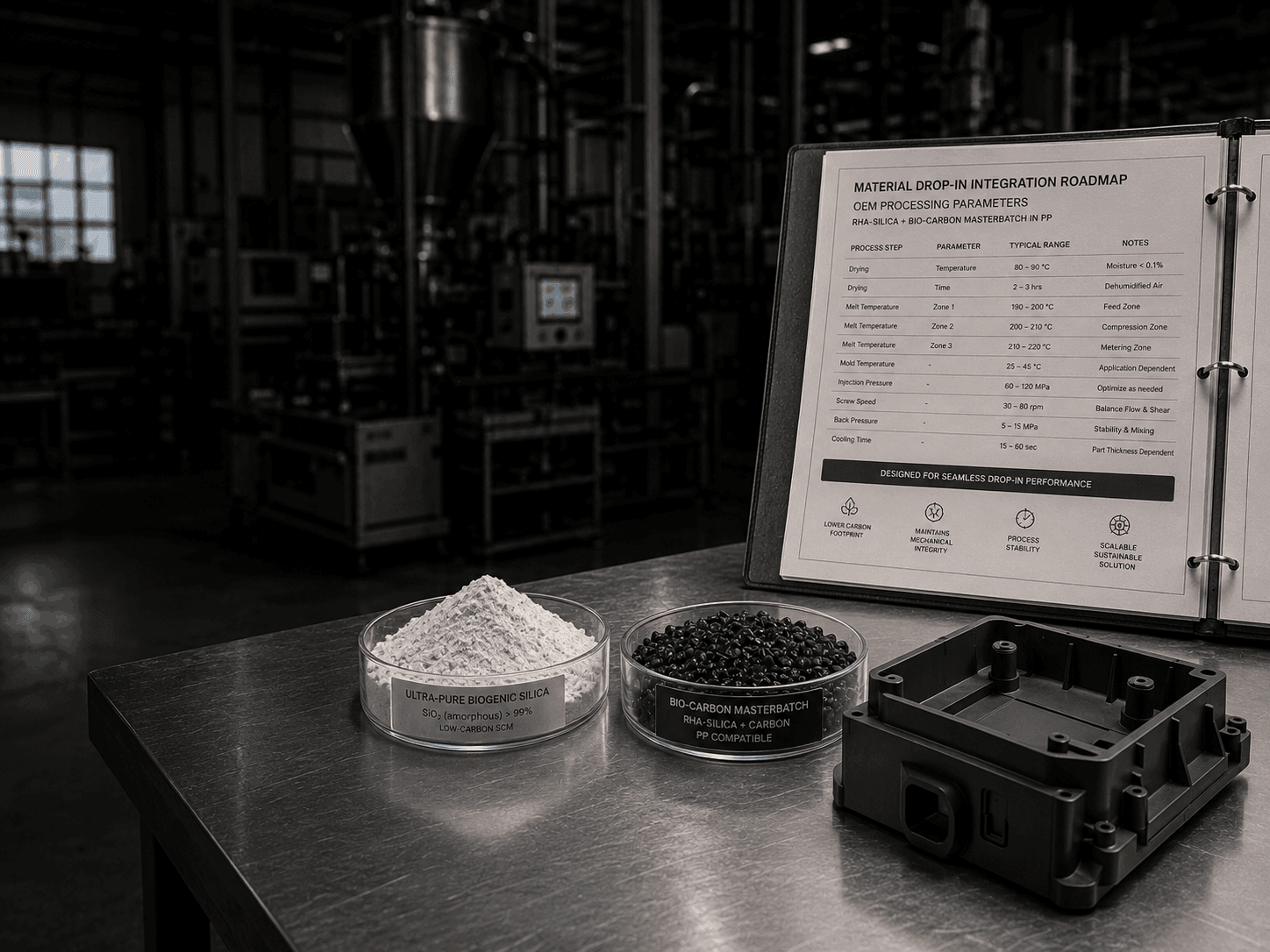
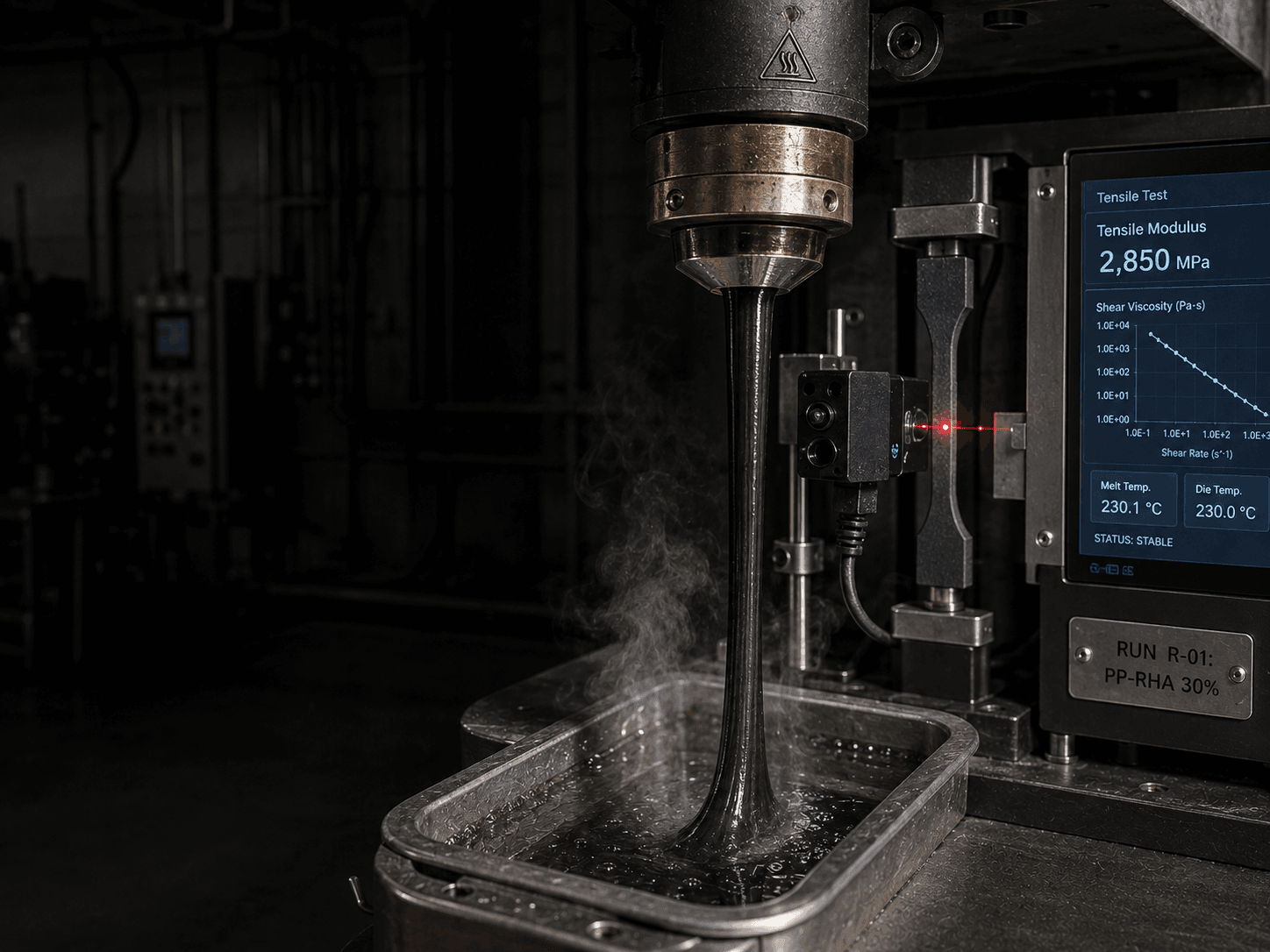
RHA Polymer Composite Program
Studying the interaction between rice husk ash particle characteristics, polymer chemistry, compounding conditions and final thermoplastic composite performance.
Sustainability should not be a marketing department.
It should be an engineering discipline.
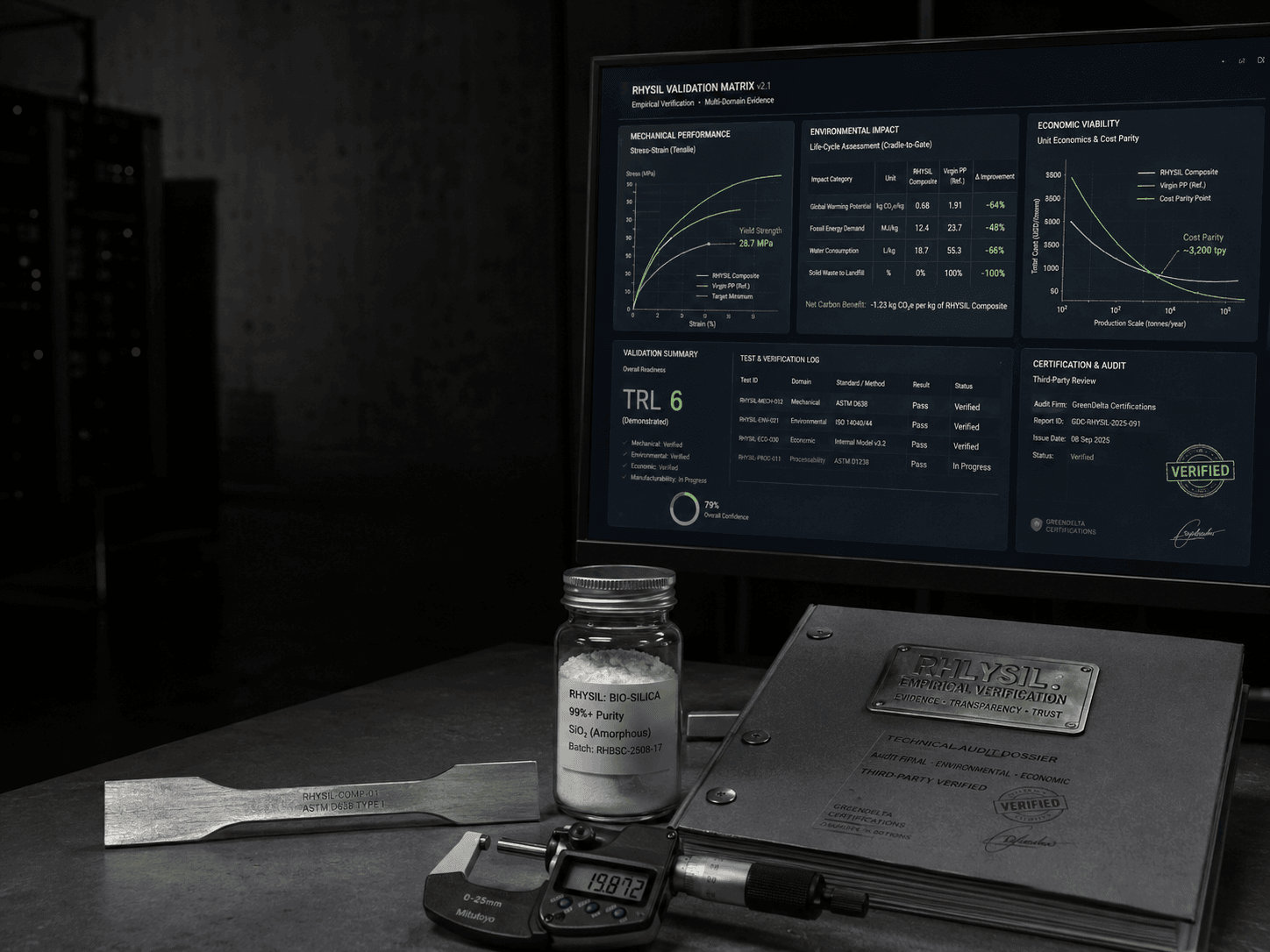
Six principles governing our material science.
Reduce unnecessary virgin-material demand across all industrial production cycles by engineering bio-silica and biogenic carbon directly into existing product formulations.
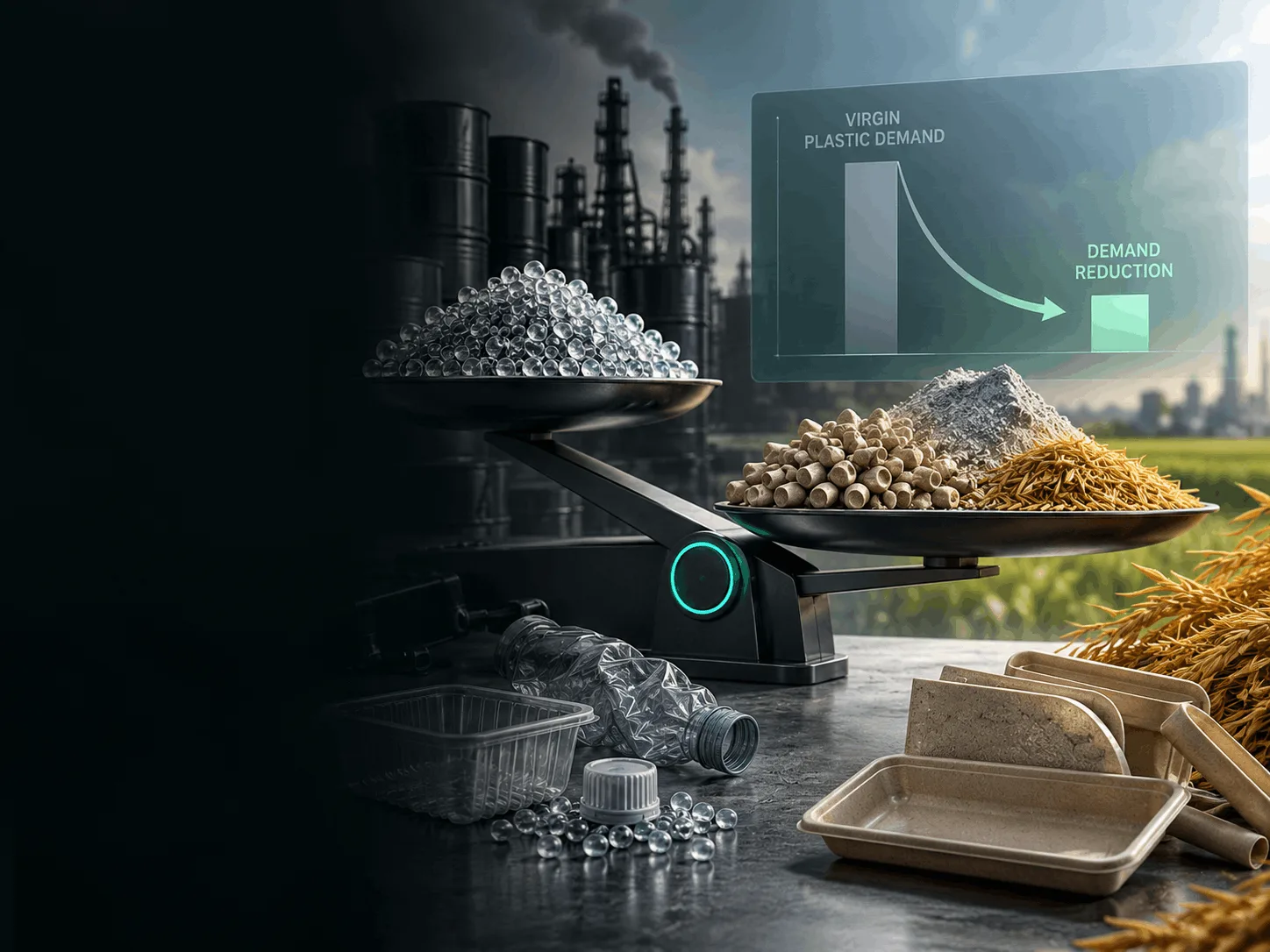
Avoid virgin-material demand
Reduce unnecessary virgin-material demand across all industrial production cycles by engineering bio-silica and biogenic carbon directly into existing product formulations.
Bridging the gap between laboratory science and industrial manufacturing.
Rhysil was founded as an advanced material sciences company designed to solve a hard material engineering bottleneck: translating molecular discoveries from clean laboratory benches into reliable, high-volume manufacturing inputs.
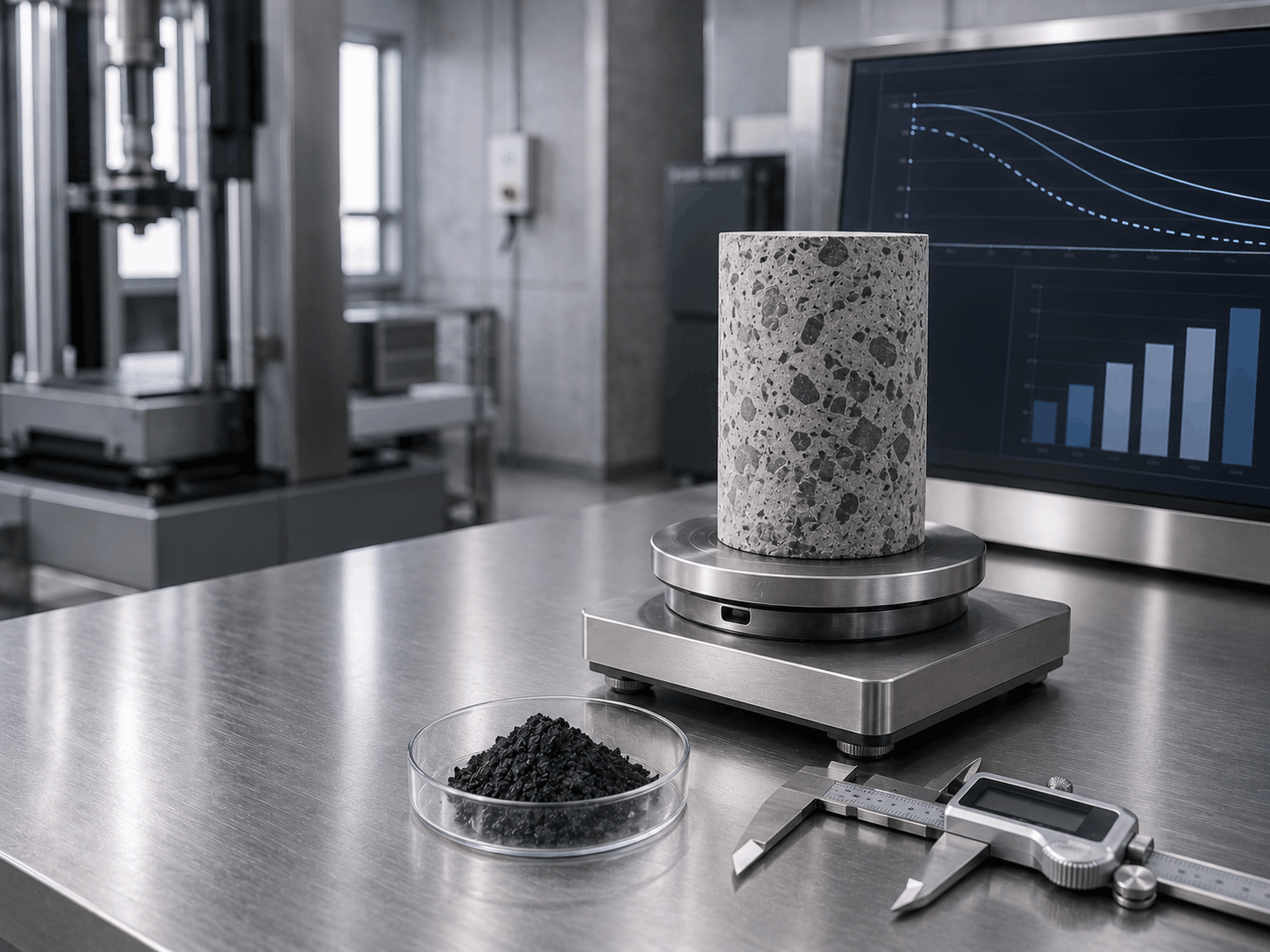
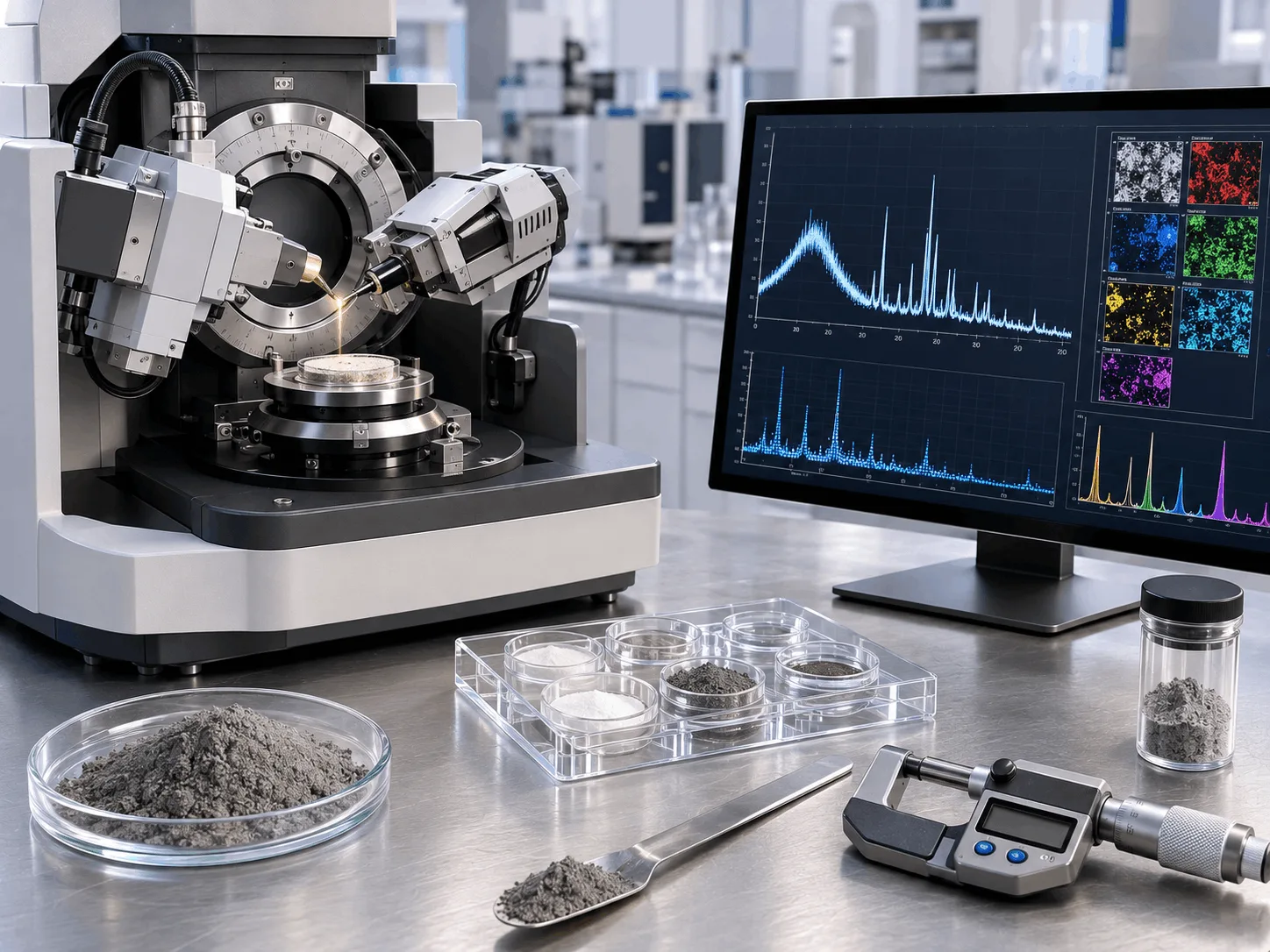
01. Characterize
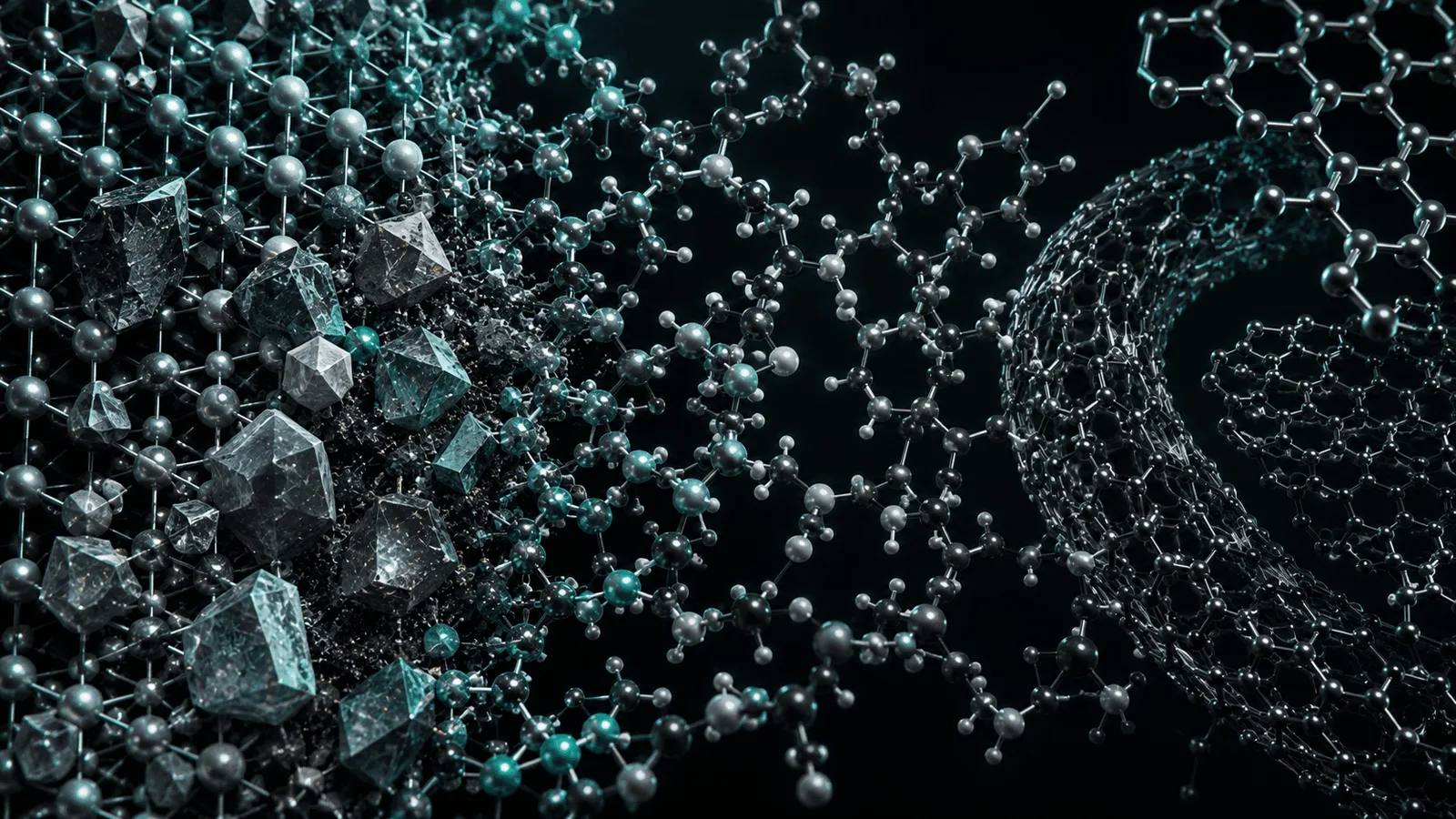
Before any chemical or physical alteration, we establish a scientific baseline of the raw agricultural residues. Using advanced spectroscopy and diffraction, we characterize carbon chains, crystalline structures, and mineral inclusions.
Complex materials problems require collaboration.
Rhysil welcomes collaboration with universities, laboratories, materials companies, equipment manufacturers, construction-product companies, polymer specialists, lifecycle analysts and climate-technology partners.