Evidence before environmental claims.
Rhysil operates under a strict carbon accounting thesis: climate claims must be calculated through verified LCA boundaries and mechanical permanence data. We evaluate impact using engineering, not marketing.
“We measure material performance in megapascals and climate impact in kilograms of CO2 avoided.”
Avoid
Our primary objective is reducing global demand for virgin-extracted minerals. By substituting high-impact industrial filler inputs with valorized residues, we mitigate the upstream energy, transport, and open-pit mining emissions of raw quartz, talc, or clay.
Every metric ton of bio-silica substituted avoids equivalent virgin mining emissions.

Actionable Carbon Pathways
Displaces virgin open-pit quartz and talc quarrying emissions directly at point-of-origin.
Replace
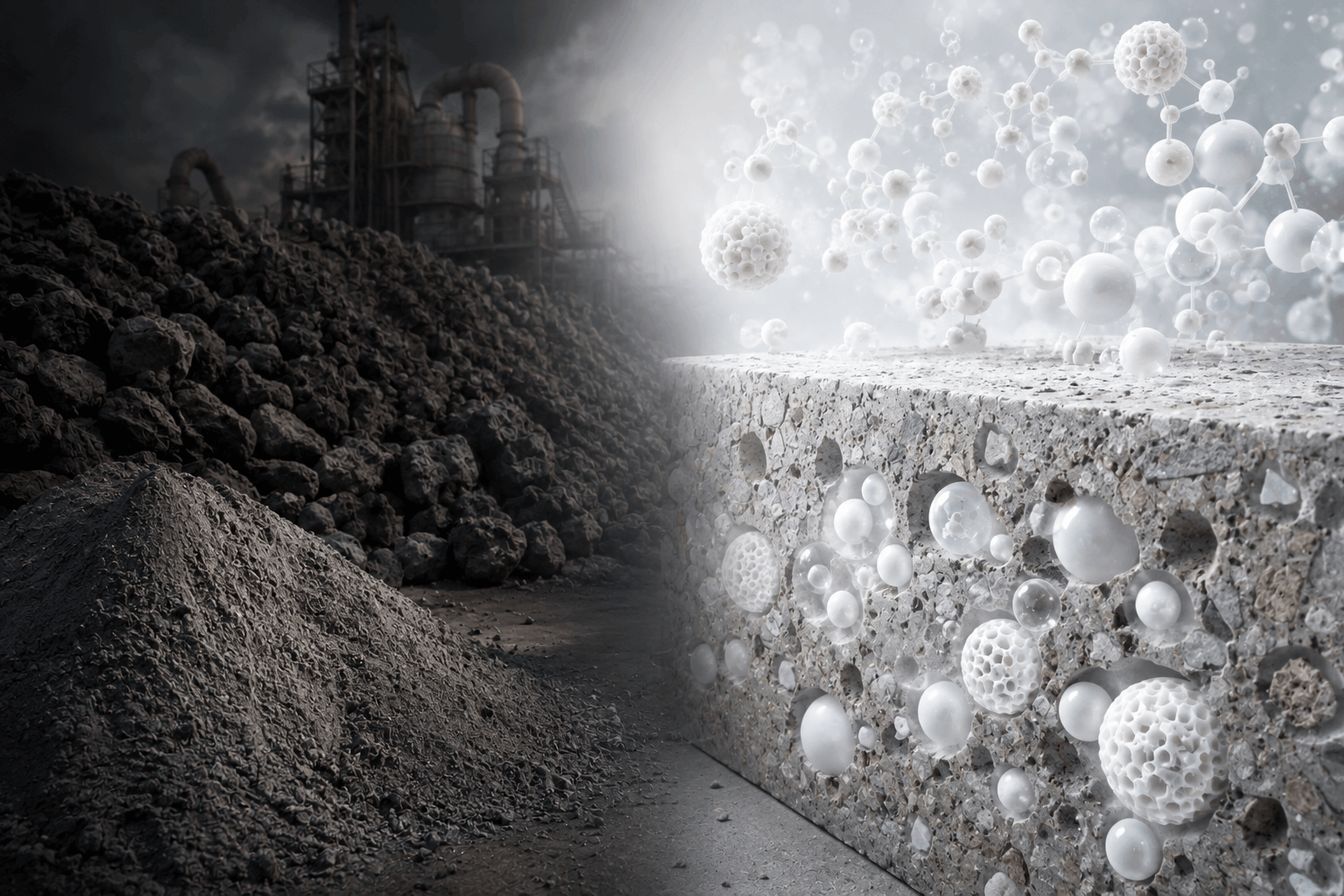
We replace carbon-intensive binder agents (such as standard Portland cement or virgin polypropylene) with mineral-rich bio-intermediates. These substitutions are governed strictly by equivalent structural performance verification.
Up to 30% binder reduction in concrete matrices has been validated at bench-scale.
Actionable Carbon Pathways
Formulates high-reactivity pozzolanic bio-silica to replace up to 30% Portland cement clinker.
Recover
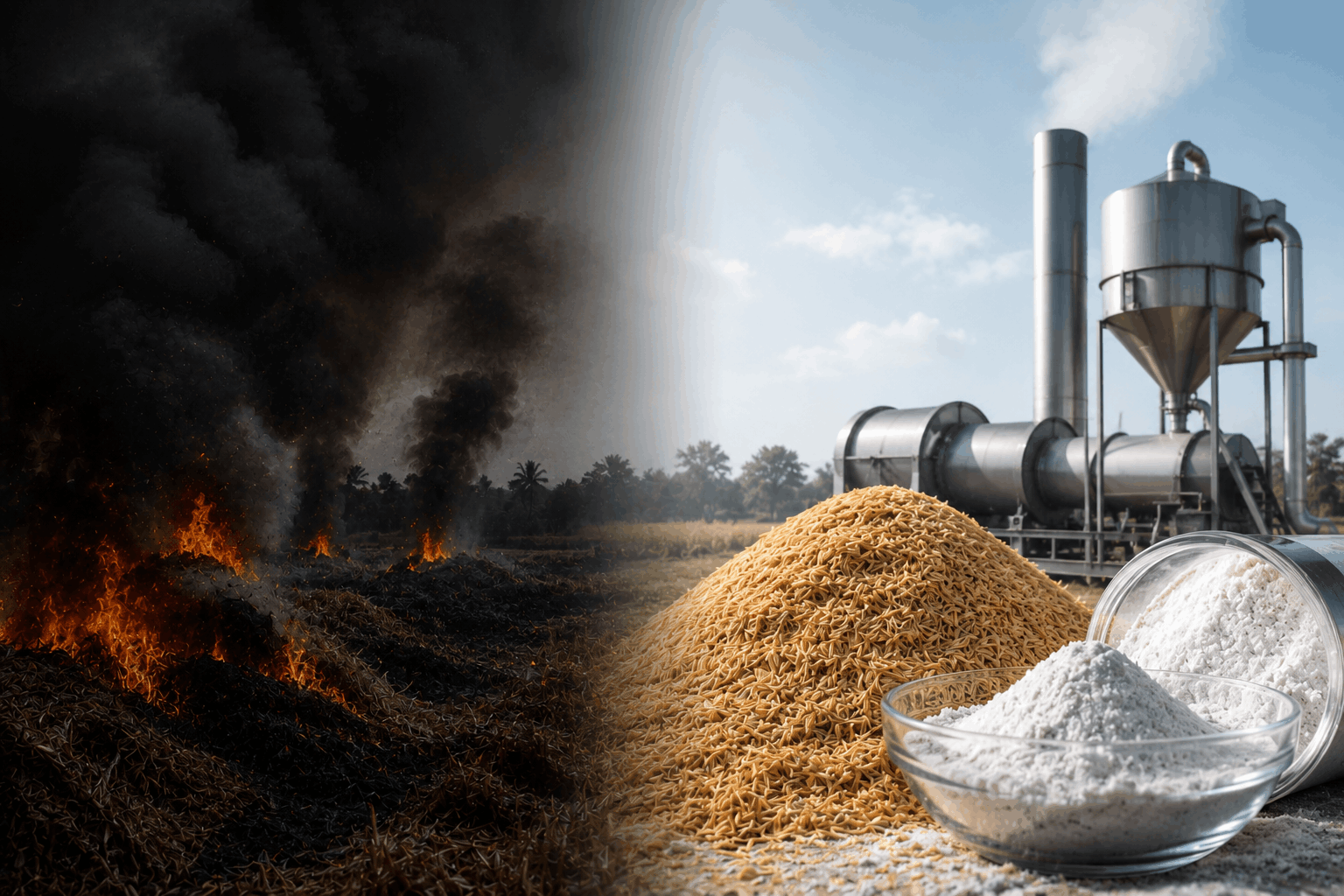
Unregulated agricultural residues are frequently left to decompose in open heaps or burned in fields. Decomposition releases carbon back into the atmosphere as carbon dioxide or, in anaerobic heap conditions, highly potent methane (CH4) gas.
Recovering residues mitigates immediate biological methane decay paths.
Actionable Carbon Pathways
Arrests uncontrolled open-field stubble burning and fugitive particulate emissions.
Re-engineer
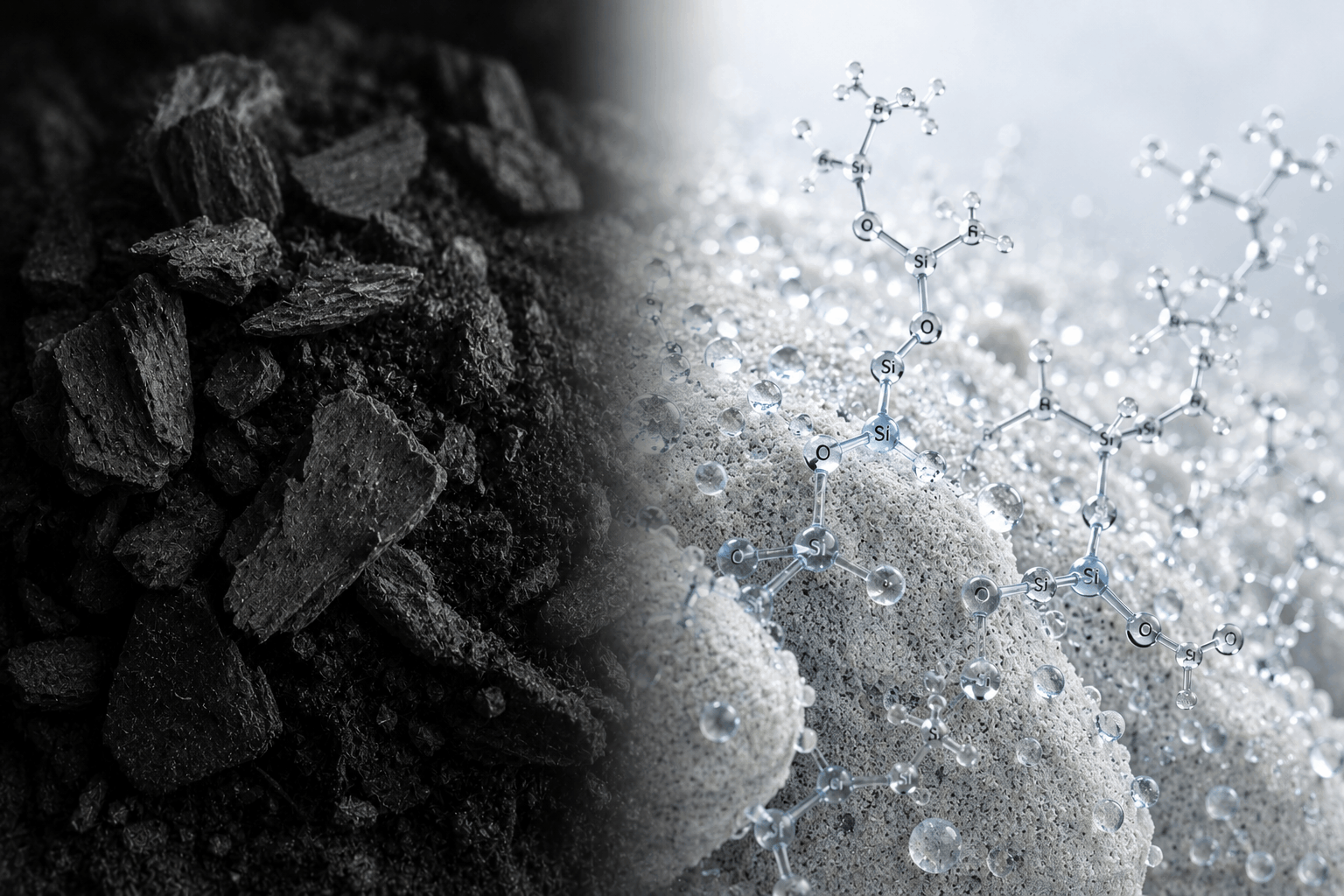
Valorizing residues is not just about downcycling. We apply chemistry and thermal control to reconstruct raw residues into high-performance chemical components, ensuring they meet the strict mechanical thresholds of global manufacturing.
Chemical surface treatment turns agricultural ash into highly hydrophobic reinforcing fillers.
Actionable Carbon Pathways
Air-jet milling and morphological classification down to narrow 1-5 micron D50 distributions.
Retain
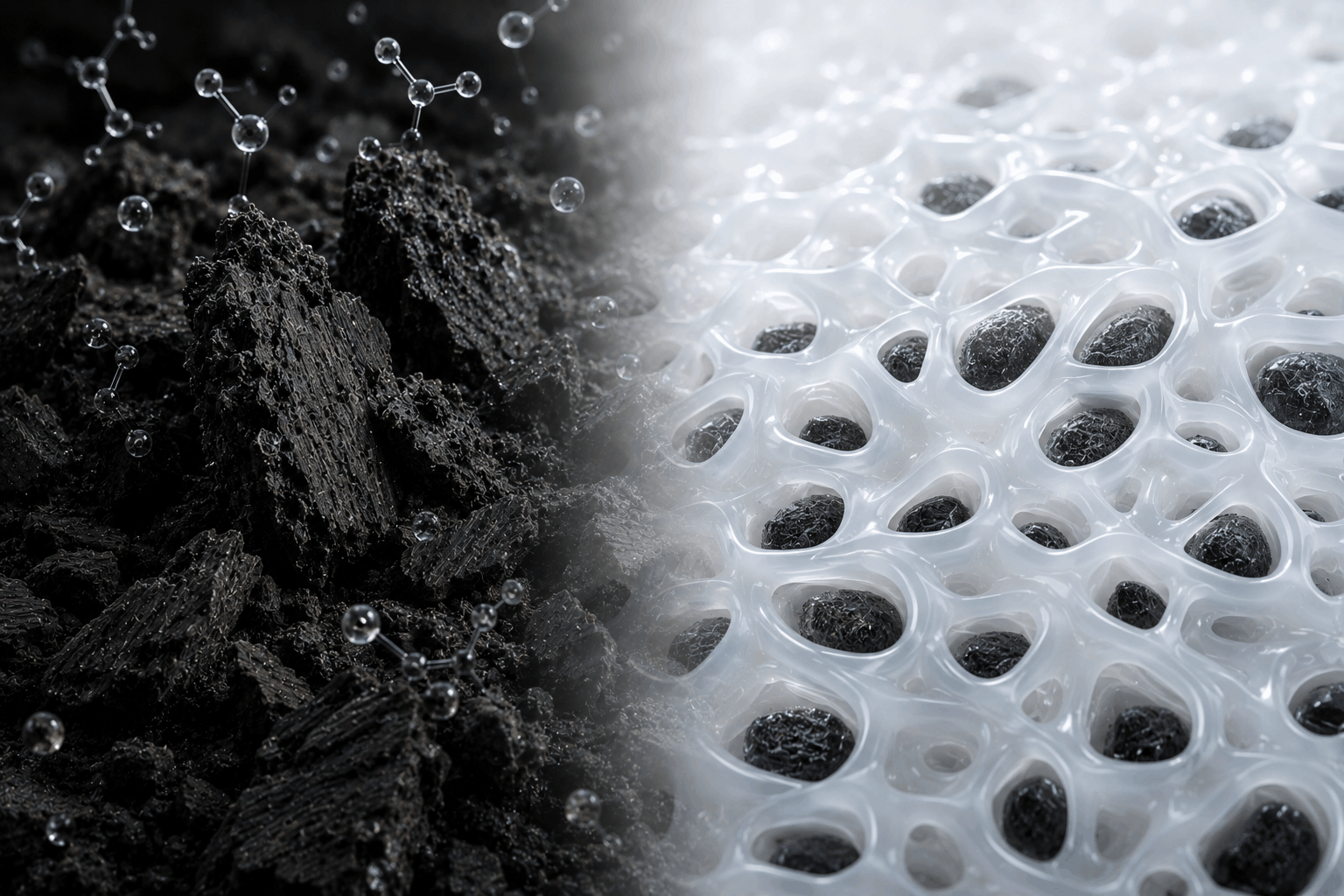
Once biological carbon is encapsulated inside a dense composite matrix (such as an extruded polymer siding panel or a concrete block), it is locked away from water and oxygen, arresting the natural organic decay loop indefinitely.
Durability metrics target carbon retention parameters exceeding 100 years.
Actionable Carbon Pathways
Hermetically encapsulates biological carbon inside hydrophobic thermoplastic matrix structures.